Nobody's Starting Anything New: Inside the Great Comfort Show Takeover
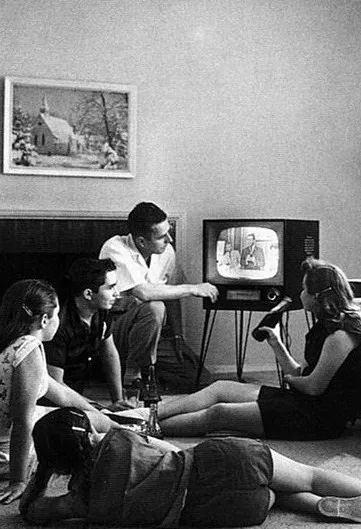
Photo: Evert F. Baumgardner, Public domain, via Wikimedia Commons
Quick poll of my own household: in the last six months, how many brand-new shows have we started from episode one? One. Maybe. And did we finish it? The jury is deliberating.
How many times have we watched Parks and Rec from the top? I'm not answering that on the grounds that the number is embarrassing.
Turns out we're not alone. Across the country, audiences are quietly staging a rebellion against new content. Nielsen data has shown for years that back-catalog titles — Suits, Friends, Grey's Anatomy, The Office — routinely dominate the streaming charts, beating flashy new premieres that cost hundreds of millions to make. In 2025, the trend isn't a trend anymore. It's just how people watch TV.
Known Endings Are a Feature, Not a Bug
Think about what a rewatch actually offers: zero risk. You know Michael Scott comes back for one more season before leaving. You know Jim and Pam end up together. You know the ending is fine. In a world where the news is a lot and the group chat is a lot and work is a lot, that certainty is worth more than any plot twist.
There's real psychology here. Familiar media lowers cognitive load — your brain doesn't have to learn new characters, track new storylines, or brace for a shocking death. Rewatching is the television equivalent of taking the same route to work every day. It's not boring. It's efficient comfort.
New shows, meanwhile, ask something of you. They demand attention, emotional investment, and worst of all, the possibility of disappointment. After investing in a few shows that got canceled on cliffhangers — looking at you, basically every streaming service — who can blame anyone for sticking with a show that already kept its promises?
Decision Fatigue Is Killing the Premiere
Here's the dirty secret of the streaming era: we have more content than any generation in history, and choosing what to watch has become a part-time job.
Endless scrolling through thousands of titles, three different apps hosting three different exclusives, a new prestige drama dropping every week — it's paralysis. Behavioral scientists call it choice overload, and it has a predictable outcome: when options are too numerous, people default to the familiar. The 40-minute scroll ends the way it always ends. "Wanna just put on The Bear again?" "Yeah. Yeah."
The Platforms Know. Oh, They Know.
And here's where it gets interesting: the streaming services aren't fighting this — they're leaning in.
Look closely at the homepages lately. "Because you watched" rows are getting bigger. Legacy sitcoms and network dramas are getting prominent placement they haven't had in years. Some platforms have quietly retooled their recommendation engines to weight rewatches and familiar titles more heavily, because a rewatch is a guaranteed session — no marketing spend, no premiere gamble, no cancellation backlash. Why spend $250 million on a new IP when Suits will do the work for free?
Even the marketing has shifted. Notice how many "new" releases are reboots, revivals, or spinoffs of things you already love? That's not a coincidence. That's the industry reading the same data we are: audiences want the known quantity. So the known quantity is what gets made.
Is This Bad? Honestly... Not Really
The hot take in media circles is that rewatch culture signals stagnation — that we've all given up on discovery. But I'd push back a little.
There's something almost radical about refusing the content treadmill. Not every free evening needs to be spent absorbing a brand-new narrative engineered to generate discourse. Sometimes the healthiest relationship with TV is the one where the show is a background comfort, like a fireplace you can put on while you fold laundry.
And besides, people still discover new things — they just do it on their own timeline, through recommendations from friends rather than algorithmic premieres. The new show that breaks through now has to earn its way into the rotation the hard way: by being genuinely good.
So go ahead. Put on the episode you've seen 14 times. The platforms already knew you would. At least now you know why — and you can enjoy it guilt-free.