Your Library Has a Turntable Now, and a 9 P.M. Listening Party
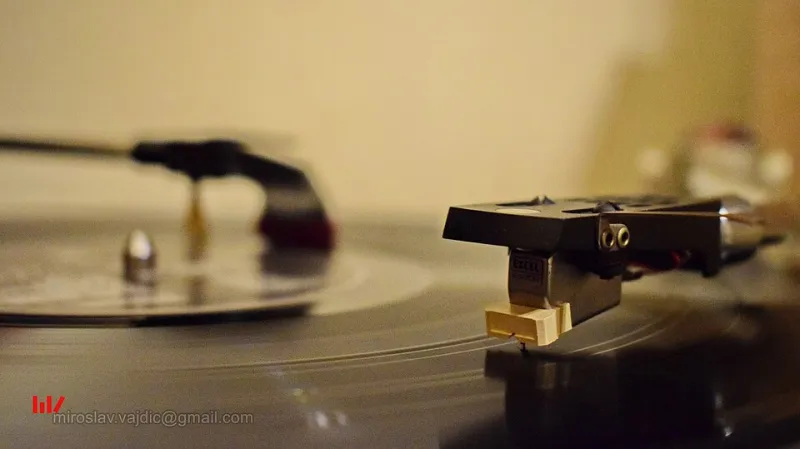
Photo: Miroslav Vajdic, CC BY-SA 2.0, via Wikimedia Commons
The first thing you notice is how quiet everyone is. Not bored-quiet. Concert-quiet — that focused hush of a room where 30 people are all doing the same thing at the same time without being asked to.
A record is playing. Somebody in the back has their eyes closed. Someone else is reading the liner notes like a menu.
There's no drink minimum. There's no DJ waving at you. There's a circulation desk.
The New Third Place Has a Card Catalog
For the last couple of years, public libraries and neighborhood community centers have been quietly building out entertainment programming that has nothing to do with books and everything to do with the thing people keep saying they can't find: somewhere to go that doesn't cost $60 before you've ordered anything.
The format varies by city. Some branches now lend vinyl alongside books and run a listening room with a decent turntable and a pair of good headphones. Others host a monthly "full album" night where the group plays one record front to back, in order, no skipping. Community centers have picked up the same playbook with film clubs, listening parties, and after-hours events that run past the building's usual closing time.
In the trade, this is all part of the long-running push to position the library as a third place — the sociology term for the spot that isn't home and isn't work. The library has an advantage most coffee shops would kill for: it's already trusted, already accessible, and already funded by the public.
Why People Are Paying $0 for a Night Out
The appeal is easier to explain than it looks. A night out, in the traditional sense, now comes with a stack of small costs: the reservation you couldn't get, the two-drink minimum, the parking, the outfit math, the low-grade social pressure to seem delighted.
A listening room asks almost nothing of you. You can show up alone. You can leave after 20 minutes. Nobody will ask what you do. You don't have to talk to the person next to you, and if you do, you already have something to discuss — the album is right there.
One branch manager in the Midwest, who has run a monthly record night for about two years, told me the attendance pattern surprised her. It's not all older patrons with deep crates. It's a lot of people in their late twenties and thirties who found the event on a neighborhood app and came in not knowing a soul.
"They're not coming for the record," she said. "They're coming because there's a reason to be in a room with other people that isn't a bar."
How a Listening Night Actually Runs
If you've never been, the structure is more traditional than you'd expect. It's closer to a book club than a party.
The typical evening goes like this: a host picks an album, sometimes themed, sometimes not. The group listens to side one without commentary. Then there's a short break — this is where the actual socializing happens, and it's optional. Then side two. Then a loose conversation that ranges from genuine insight to someone loudly defending a track everyone else skipped.
The best versions swap the host every month, which keeps one person's taste from becoming the whole institution. Some rooms pair the album with a related book display, because of course they do. Others bring in a local record shop to set up a small pop-up table, which is the most effective fundraising idea anyone has had in years.
One thing that does not happen: a hard sell. There's no upsell, no membership pitch, no QR code to scan on the way out.
The Catch (There's Always One)
Here's the honest part. These events are cheap to attend and expensive to run. Turntables need a stylus budget. After-hours staffing means overtime. The lending collection takes a hit when records come back warped, and vinyl, unlike a paperback, does not forgive a hot car.
That's why the strongest programs are usually the ones with a small partner — a local record store, a college radio station, a Friends of the Library group that can absorb a piece of the cost. The ones that try to run solo on a shoestring tend to be the ones that quietly stop after eight months.
How to Find One — Or Start One
The search is less obvious than it should be. Start with your library system's events calendar rather than the branch page; listening nights are usually listed as programming, not as a service. Ask at the reference desk about after-hours or adult programming — staff usually know what's actually running better than the website does. Community centers, independent record shops, and campus radio stations are the next places to check, since they often co-host and don't always cross-post.
If nothing exists, the bar to starting one is genuinely low: a room, a turntable, one album, and a fixed monthly date. Libraries are unusually receptive to a proposal from a patron who volunteers to run it, and the ones that have done it will tell you the same thing — the first night is awkward, the third night is a habit, and by the sixth, someone will ask if they can bring their own record.
That's the whole pitch, really. A room, a record, and a reason to be somewhere that isn't your couch or a bar tab. It's not a revolution. It's just a nice Thursday.