You Know Everything About Your Favorite Creator — But Do They Know You Exist?
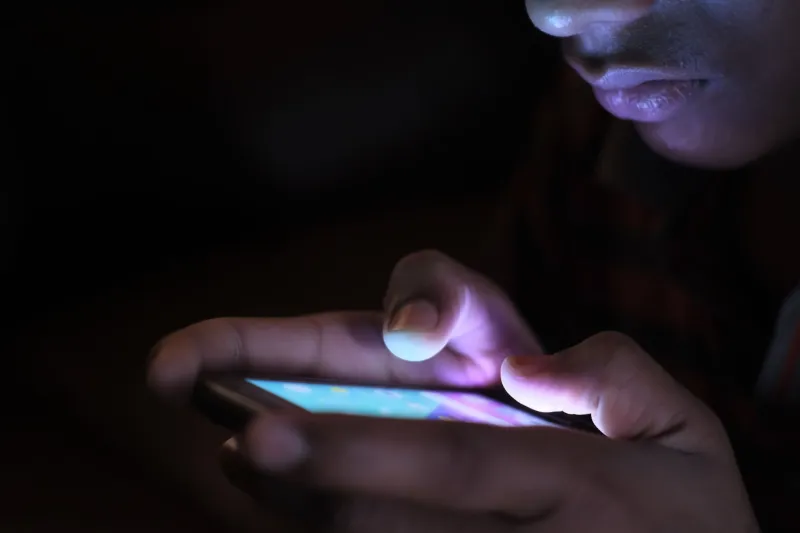
You know their coffee order. You've watched every vlog, read every caption, stayed up until midnight waiting for their latest drop. You've defended them in comment sections against strangers. You've cried when they went through something hard. You've felt genuinely proud when they succeeded.
And they have absolutely no idea who you are.
This is the quiet reality of parasocial relationships — one-sided emotional bonds with public figures, influencers, podcasters, streamers, and celebrities that feel deeply personal but exist entirely on one side of the screen. And honestly? They're more common than most of us want to admit.
The question worth asking isn't whether you have them. It's what they're costing you.
Why We're Wired for This
Let's be clear: parasocial attachment isn't a character flaw. It's actually a pretty natural response to the way content is designed. Creators talk directly into the camera. They share their morning routines, their relationship struggles, their therapy breakthroughs. The format is engineered to feel intimate.
Your brain doesn't fully distinguish between "someone talking to you" and "someone talking at a camera that you happen to be watching." That's not a bug — it's how human social processing works. We evolved to form bonds with people we spend time with, and if you're spending two hours a day with someone's voice in your ears, your nervous system is going to respond accordingly.
Throw in an algorithm designed to keep you coming back, and you've got a recipe for emotional investment that can quietly grow to a size that doesn't match the actual relationship — which, again, is not a relationship at all.
The Hidden Cost Nobody's Talking About
Here's where it gets uncomfortable. Parasocial connections don't just exist alongside your real relationships. They start to compete with them.
Emotional energy is finite. The time you spend processing a creator's drama, feeling invested in their storyline, or consuming content about their life is time and mental bandwidth that isn't going toward the people who are actually in your corner. Your friend who just went through a breakup. Your sibling who's been feeling distant. Your coworker who keeps hinting they need someone to talk to.
Those relationships require effort, reciprocity, and sometimes discomfort. They ask things of you. Parasocial ones never do. And that asymmetry is exactly what makes them so seductive — and so quietly corrosive.
Research from communication and psychology fields has found that people who invest heavily in parasocial relationships often report feeling more connected overall, even when their actual in-person relationships are deteriorating. The fake connection creates a false sense of social fullness. You feel like you have people. But those people don't actually have you back.
The Loyalty Trap
One of the more specific ways this plays out — especially online — is in creator loyalty. Fandoms are real communities, and that's not nothing. But there's a version of that loyalty that starts to look a little more like... codependency.
When you feel personally hurt by a creator's controversy. When you get into genuine arguments with strangers to defend someone who doesn't know you exist. When you feel actual grief over a creator "leaving" a platform or ending a series. These aren't just intense fan moments. They're signs that the emotional investment has started to outpace the actual relationship structure.
And the creators themselves? Many of them are great. Plenty of them are genuinely trying to build something meaningful. But they are also, in many cases, running a business. The intimacy is real — and also a product. Both things can be true.
So What Do You Actually Do About It?
This isn't a call to delete your subscriptions and go live off the grid. That's not realistic, and frankly it's not necessary. The goal isn't to stop enjoying content — it's to recalibrate where you're directing your emotional investment.
A few honest strategies:
Notice when you're outsourcing connection. The next time you reach for a podcast or a YouTube video when you're lonely, bored, or stressed, pause. Is there a real person you could text instead? Not always — sometimes you just want background noise, and that's fine. But if your go-to response to emotional discomfort is always to consume someone else's life, that's worth examining.
Set some loose content boundaries. This doesn't have to be dramatic. It could be as simple as not watching anything after 10 PM, or not consuming content about a specific creator during times when you're already feeling low. The goal is just to stop letting the algorithm decide how much space this stuff takes up in your head.
Get intentional about real-world connection. This sounds obvious but it's genuinely hard in 2024. Text someone first. Make the plan. Show up even when you're tired. Real relationships require friction, and friction is exactly what parasocial ones don't have — which is why we avoid the real ones when we're running low on energy.
Let yourself be a little bored. Boredom is actually the gateway to genuine human connection. When you're not constantly filling the silence with content, you start to notice who you actually want to reach out to. Let that happen.
The Real Network
Here at Shay's Net, we talk a lot about building your world — your vibe, your people, your community. And the honest truth is that none of that can be built through a screen pointing at someone who doesn't know your name.
The people who will show up for you when things get hard, who will celebrate you without it being content, who will sit in the uncomfortable stuff with you — those are the ones worth investing in. Not because parasocial connection is shameful or silly, but because the real thing is so much better.
You deserve people who know you exist. Go find them.