Your Feed Isn't Broken — It's Reading You Like a Book
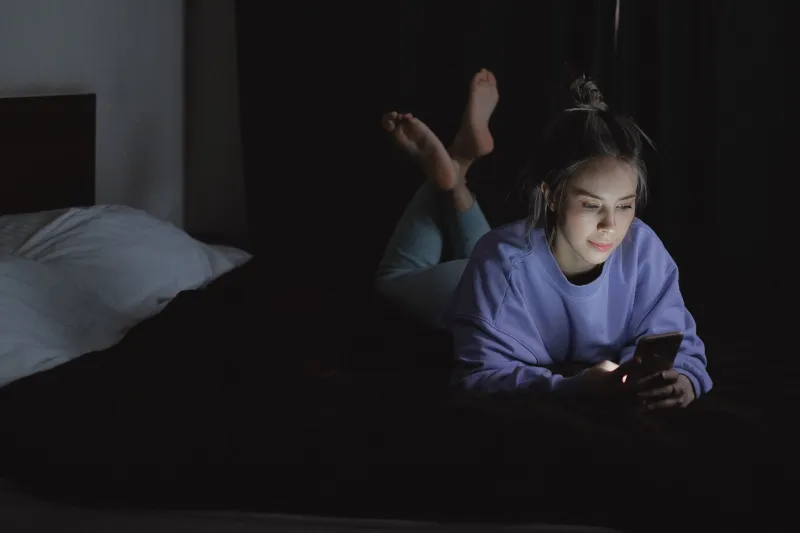
You're lying in bed at 11:47 PM on a Tuesday. You haven't texted anyone back in three days. You've watched the same show four times. And somehow — somehow — your For You page has shifted from the cooking videos and concert clips you usually love into a strange, hypnotic rabbit hole of niche content you never asked for. Slow-motion rain videos. Strangers posting about feeling stuck. Oddly satisfying cement-pouring compilations.
You didn't search for any of that. So why is it there?
Here's the uncomfortable truth: the algorithm didn't malfunction. It picked up on you.
The Algorithm Is Paying Attention — Even When You Think You're Just Zoning Out
Social media platforms like TikTok, Instagram, and YouTube aren't just tracking what you click. They're tracking how long you pause on something before you scroll past. They notice when your usual patterns shift — when you stop liking things, when your watch time increases on slower, moodier content, when you start rewatching videos instead of moving on.
All of that behavioral data gets fed into recommendation systems that are, essentially, trying to predict what emotional state you're in and serve you content that matches it. Not to help you feel better. To keep you on the app longer.
Think about it this way: a bored, restless, emotionally adrift user is actually a great user from a platform's perspective. You're not satisfied, which means you'll keep scrolling. You're looking for something — comfort, stimulation, connection, distraction — and the algorithm is more than happy to keep dangling possibilities in front of you without ever fully delivering.
That's not an accident. That's the design.
What "Getting Stuck in a Rut" Looks Like to a Machine
When life feels stagnant — a job that's going nowhere, a relationship that's gotten quiet, that general low-grade dissatisfaction that doesn't have a name — your behavior online shifts in subtle ways. You might not even notice it consciously, but the platform does.
You start scrolling later into the night. You rewatch comfort content. You linger on posts from people who seem to be living lives that feel bigger or freer than yours. You tap into comment sections looking for... something. Validation, maybe. Or just proof that other people feel this way too.
To the algorithm, these are signals. It doesn't know you're bored with your job or that your friend group has drifted. But it knows your engagement patterns have changed, and it responds by recalibrating what it shows you. The content gets more emotionally charged. More niche. More targeted to whatever vague feeling you seem to be chasing.
Before long, you're three hours deep into content you never would have found on a normal day — and you feel somehow more unsettled than when you started.
The Emotional Feedback Loop Nobody Warned You About
Here's where it gets genuinely worth paying attention to: there's a feedback loop happening that most people don't realize they're caught in.
You feel a certain way → your behavior changes → the algorithm detects the shift → it serves you emotionally resonant content → that content intensifies your current mood → your behavior shifts further → the algorithm doubles down.
It's not that the platform caused your bad mood. But it can absolutely amplify it, extend it, and make it harder to climb out of. Research has consistently shown that passive scrolling — the kind you do when you're already low — tends to make people feel worse, not better. And yet the algorithm keeps the content coming because your engagement numbers are actually up.
You're more hooked when you're vulnerable. The platforms know this. They've known it for a while.
Why the "Weird" Content Hits Different
There's a reason that oddly specific niche content feels almost too relatable when you're going through something. The algorithm has gotten remarkably good at clustering users by emotional state rather than just interest category. You might get served content tagged with nothing that seems relevant to your life, but it feels like it was made for you.
That feeling is part of the hook. When you're stuck, disconnected, or just quietly struggling, finding content that mirrors your internal weather can feel like relief. Like someone out there gets it. And sometimes, honestly, it is comforting — there's real community in shared experience, even when it's mediated through an app.
But there's a difference between finding genuine connection and being algorithmically herded toward content that keeps you in a loop. One leaves you feeling less alone. The other leaves you feeling weirdly hollow after you finally put your phone down.
So What Do You Actually Do With This Information?
Knowing the algorithm is reading your emotional state doesn't mean you have to go full digital hermit. But it does mean you can start to notice the pattern.
When your feed starts getting strange — when the content shifts into that oddly specific, emotionally loaded territory — treat it like a signal. Not from the app, but from yourself. Something in your actual life probably needs attention. The algorithm noticed before you did because it's watching your behavior 24/7 and you're, you know, busy living.
A few things that actually help:
Break the pattern deliberately. Search for something completely unrelated to how you're feeling. Watch a tutorial for a skill you want to learn. The algorithm recalibrates faster than you think when you give it new signals.
Set a time limit before you start, not after. Once you're in a scroll spiral, it's much harder to stop. Deciding "I'm going to give this 20 minutes" before you open the app puts you in a different headspace than trying to drag yourself off it an hour later.
Check in with yourself offline. If your feed has been weird for a week, ask yourself what's actually going on. The app picked up on something. That something is worth your attention more than the content it's serving you.
Curate aggressively. Follow accounts that actively make you feel good, not just accounts that feel familiar or comforting in a low-grade way. There's a difference, and your feed will reflect it.
The Bigger Picture
We talk a lot about social media and mental health in broad strokes — too much screen time, comparison culture, the highlight reel problem. But the algorithmic emotional tracking piece is one that doesn't get enough airtime, and it's arguably the most intimate part of the whole equation.
These platforms have built systems that are, functionally, mood detectors. And they're using that detection not to support you, but to monetize your attention during the moments when you're most susceptible to giving it away.
That's worth sitting with for a second.
Your feed getting weird isn't a glitch in the system. In a lot of ways, it is the system working exactly as intended. The question is whether you want to keep letting it decide what you need — or whether you want to start making that call yourself.