Loneliness Is a Product Now — And Your Feed Is the Store
The Feed Knows Something You Don't Want to Admit
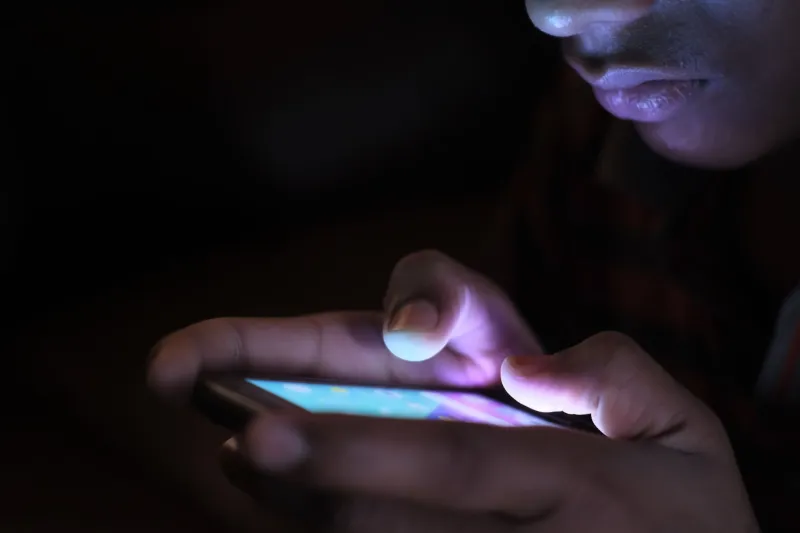
There's a specific kind of 2 a.m. scroll that probably sounds familiar. You're not really looking for anything. You're just... there. Floating through videos of someone cooking pasta in a tiny Italian kitchen, or a creator doing a "come with me" vlog through their morning routine, and somehow it feels almost cozy. Almost like company.
That feeling isn't an accident. It's a feature.
Social platforms — TikTok, Instagram, YouTube, all of them — have spent billions of dollars and years of behavioral research figuring out exactly what emotional state keeps a person engaged longest. And the answer, uncomfortably, is a particular flavor of loneliness. Not the kind that makes you close the app. The kind that makes you feel like one more video might fix it.
What the Algorithm Is Actually Optimizing For
Here's the thing about recommendation algorithms: they don't care about your wellbeing. That's not cynicism, it's just engineering. These systems are built to maximize a metric — usually watch time, engagement, or session length — and they're extraordinarily good at their jobs.
What they've learned, through processing the behavior of billions of users, is that content featuring warm, direct-to-camera creators who speak in second person ("you need to hear this," "this is for anyone who feels like...") holds attention longer than almost anything else. They've learned that videos which create a sense of inside knowledge — "the thing nobody talks about" — spike engagement. They've learned that content that mirrors your current emotional state back at you keeps you watching.
So when you're feeling disconnected and you open TikTok, the algorithm doesn't just see a user. It sees a psychological profile with a specific vulnerability window. And it serves content accordingly.
This is what researchers call parasocial exploitation — the deliberate surfacing of content designed to trigger one-sided emotional bonds. You feel like you know these creators. The algorithm made sure of it.
FOMO Is the Engine, Loneliness Is the Fuel
Fear of missing out gets talked about a lot, but usually in the context of parties you weren't invited to or vacations you can't afford. The subtler version is more insidious: the feeling that somewhere out there, people are having the kind of genuine connection, community, and belonging that your own life is somehow lacking.
Platforms engineer this constantly. The comment sections that feel like inside jokes between creator and fans. The Discord servers you can join but never quite crack. The live streams where the creator greets regulars by name — and you're not one of them yet. All of it creates a gravitational pull. Keep watching. Keep engaging. Get closer.
The cruel irony is that the more time you spend chasing that sense of belonging through the feed, the more isolated you tend to feel in your actual life. It's the scroll equivalent of eating junk food when you're actually thirsty — it addresses the surface feeling without touching the real need.
When Algorithmic Curation Feels Like Being Understood
Let's be honest about something: sometimes the algorithm sends you something that genuinely helps. A video that articulates something you've been feeling but couldn't name. A creator whose perspective shifts the way you see a situation you're dealing with. Content that, weirdly, feels like it was made for you.
That experience is real. And it can lead to real community — fan spaces, subreddits, group chats that grow into friendships with actual substance. Not every parasocial relationship is a trap. Some creators are genuinely building something meaningful, and some of the communities that form around them are legitimate.
The question worth sitting with is: how do you tell the difference?
Here's a rough framework that might help:
Signs you've found something real:
- The community exists independently of the creator — people talk to each other, not just about the creator
- You've had exchanges that felt mutual, even if small
- You'd still feel connected to the people even if the creator stopped posting
- Engaging with this content leaves you feeling more energized, not more hollow
Signs you're being kept in a loop:
- You feel anxious when you haven't checked in for a day
- The creator's life feels more vivid and real to you than your own social life
- You've started to feel competitive with other fans for the creator's attention
- You're watching more but feeling progressively worse
Taking Back the Remote
None of this means you need to delete everything and move to a cabin. But it does mean that a little intentionality goes a long way.
Start by noticing the emotional state you're in before you open an app. Are you bored? Anxious? Genuinely looking for something specific? The algorithm is going to respond to your state, so it's worth knowing what signal you're sending.
Be deliberate about what you follow versus what you let the recommendation engine choose for you. The "For You" page and the "Explore" feed are designed to keep you in a state of low-grade seeking. Your subscriptions and intentional follows are where you actually have some agency.
And occasionally, ask yourself whether the connection you're getting from a creator or a community is adding to your life or substituting for parts of it. There's nothing wrong with enjoying content. There's something worth examining when it becomes the main source of feeling understood.
The algorithm is very, very good at its job. You're allowed to be just as intentional about yours.