When You'd Rather Watch Someone Else's Life Than Live Your Own
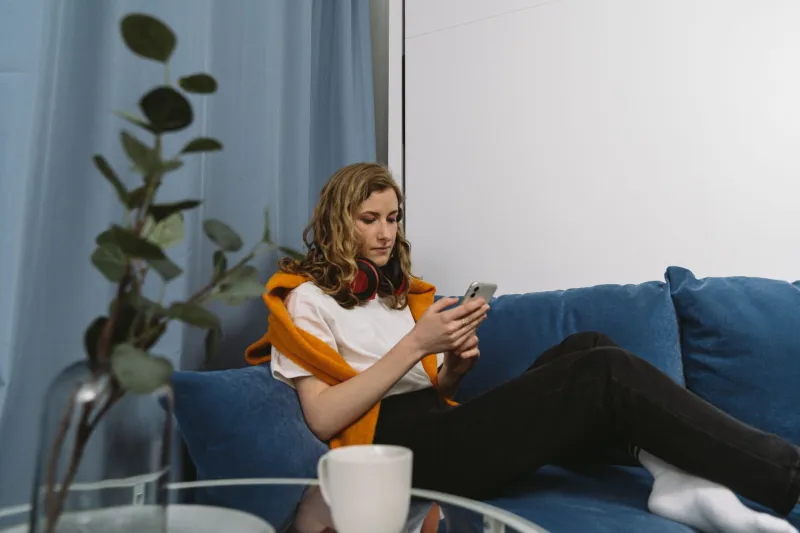
Let's be honest for a second. You've been there. It's a Tuesday night, you're on the couch, and instead of doing literally anything you said you were going to do — work out, call your mom back, start that project — you're deep in someone else's life. Maybe it's a travel vlogger bouncing around Portugal. Maybe it's a couple doing a house transformation in rural Tennessee. Maybe it's just a stranger on TikTok who has, somehow, the most aesthetically pleasing breakfast routine you've ever seen.
And the weird part? You can't stop watching. Not because it's thrilling. But because something about it feels... easier than being you right now.
Here's the thing nobody really says out loud: your algorithm didn't trick you into this spiral. It just handed you a mirror.
The Feed Doesn't Create Dissatisfaction — It Reveals It
There's a common narrative that social media makes us unhappy. And sure, there's research to back up parts of that. But let's flip it for a second. What if the endless consumption isn't the cause of feeling unfulfilled — what if it's actually a symptom?
When life feels flat, uncertain, or just kind of meh, the brain looks for stimulation. It wants novelty, narrative, and the sense that something is happening. Watching someone else's curated life delivers all three with zero effort. It's not laziness. It's your nervous system reaching for the path of least resistance.
The algorithm is smart enough to notice patterns in your behavior — the lingering, the rewatching, the 2 a.m. rabbit holes — but it didn't manufacture the itch. You brought the itch. It just handed you the scratching post.
Psychologists call this kind of escapism "experiential avoidance" — when we use external stimulation to sidestep uncomfortable internal states. Boredom, restlessness, a low-grade sense that your life isn't quite where you want it to be. None of those feelings are fun to sit with. So instead of sitting with them, we watch someone else's highlight reel until we fall asleep.
Why Other People's Lives Feel So Watchable Right Now
There's something specifically seductive about lifestyle content in the current moment. It's not just entertainment — it's aspirational architecture. You're not just watching a person make sourdough or tour an Airbnb in the Smoky Mountains. You're watching a version of life that feels intentional. Purposeful. Like someone has figured something out that you haven't yet.
And that hits different when you're in a season where your own life feels a little unscripted.
American culture has always had a complicated relationship with ambition and self-improvement. We love a glow-up story. We love the idea that someone started from nothing and built something beautiful. Content creators have basically industrialized that fantasy, packaging it into 8-minute videos with good lighting and a lo-fi playlist underneath.
When you're bored with your own life, those videos don't just entertain you — they temporarily loan you a sense of momentum. You feel like something is moving, even if it's someone else's something.
The problem is that borrowed momentum doesn't last. The video ends. You're still on the couch. And now you feel that particular brand of hollow that only comes from realizing you spent two hours watching someone else live.
The Boredom Signal Is Actually Useful
Here's the reframe that might actually help: boredom with your own life isn't a flaw. It's feedback.
Some therapists and behavioral researchers argue that restlessness — that low hum of dissatisfaction — is one of the most productive emotional states we have, if we let it do its job. It's your internal system flagging that something needs to change, something needs attention, or something you care about isn't getting enough of you.
The trap is that content consumption short-circuits that signal before you can actually process it. You feel the restlessness, you open an app, and the feeling gets numbed just enough that you don't have to deal with it. Rinse and repeat for six months, and suddenly you're not sure what you even want anymore — because you haven't let yourself stay uncomfortable long enough to figure it out.
So the next time you catch yourself three videos deep into a stranger's life at 11 PM, instead of just closing the app out of guilt, try pausing and asking: What was I feeling right before I picked up my phone?
Seriously. Just that one question can start to break the loop.
Recognizing When Your Feed Has Replaced Your Life
There's a difference between enjoying content and using it as a stand-in for actually doing things. Here are a few honest signs that you've crossed from one into the other:
You watch more than you make or do. If you're consuming hours of content about cooking, fitness, travel, or creativity — but you haven't actually cooked a new recipe, worked out, taken a trip, or made anything in months — that gap is worth noticing.
Other people's wins feel personal. Not in a community-celebration way, but in a way that leaves you feeling weirdly deflated about your own life afterward.
You're vague about what you actually want. When someone asks what you're excited about or working toward, you draw a blank — but you could tell them everything about your favorite creator's latest project.
Scrolling is the default, not a choice. There's no decision being made. You just... end up there. Every time.
None of this is a moral failing. It's just a pattern worth interrupting.
Getting Back Into Your Own Story
You don't have to go full digital detox or delete everything. This isn't that kind of piece. But a few small shifts can genuinely move the needle.
Do one thing before you open an app. Just one. Make coffee without your phone. Sit outside for five minutes. Write down three things you actually want from this month. The goal is to remind your brain that your life is also happening, and it has some say in how.
Let yourself be bored — on purpose. Even for ten minutes. No phone, no TV, no podcast. Just you and the discomfort. It sounds miserable, but boredom is where a lot of good ideas and honest self-reflection actually live.
Swap passive consumption for something that produces anything. A walk. A voice memo. A text to someone you've been meaning to catch up with. The bar is low. The point is just to shift from receiving to doing.
Notice what content makes you feel energized versus drained. Not all consumption is equal. Some stuff genuinely inspires action. Some just keeps you stuck. You probably already know the difference.
You're the Main Character Here
At the end of the day, your algorithm knowing you're bored isn't a conspiracy. It's a reflection. And reflections, even uncomfortable ones, are useful.
The fact that you're drawn to other people's lives during the flat seasons of your own isn't something to be ashamed of — it's actually a pretty clear indicator that you want more. You have taste. You have a sense of what a life well-lived looks like. You just haven't fully aimed that energy at your own yet.
That's not a tragedy. That's a starting point.
Your story is still going. It just doesn't have a production budget or a ring light. But it's yours — and that counts for a lot more than the algorithm will ever be able to quantify.