From Mutuals to Actual Friends: The Rare Magic of When Online Actually Becomes Real

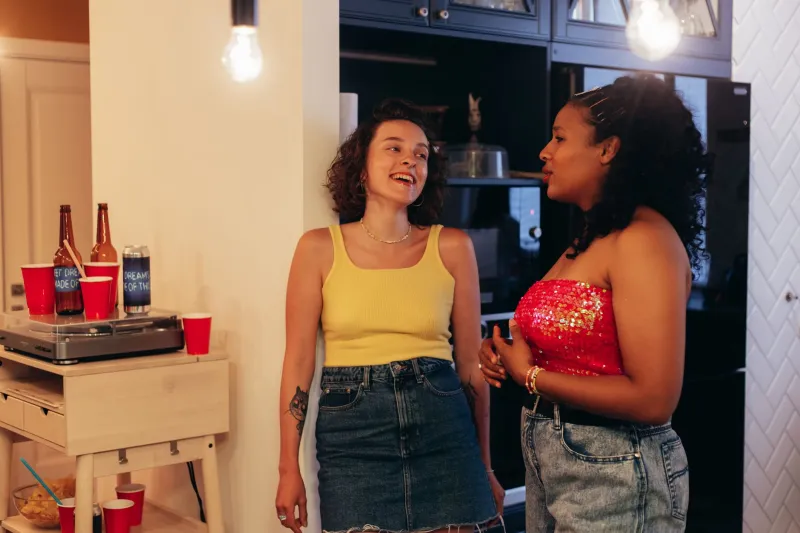
Photo by Photo by Mohammad Mardani on Unsplash on Unsplash
You know the person. You've known them for, what — two years now? Maybe three? You follow each other, you like each other's posts, you've probably exchanged a handful of comments that made you both laugh. They feel familiar. Comfortable, even. But if someone asked you to describe the friendship, you'd pause for a second too long before answering.
Because it's not quite a friendship. Not yet. It's something in between — that soft, ambiguous space where "person I know online" lives until something happens to push it somewhere more real.
Here's the thing though: sometimes that push actually comes. Sometimes the mutual follow does turn into something that looks and feels like a genuine, lasting friendship. And when it does, it's worth paying attention to how it happened — because it almost never goes the way you'd expect.
It's Rarely About the DMs
The obvious assumption is that consistent messaging is the bridge between acquaintance and actual friend. Keep the conversation going long enough, and eventually you've built something real. Right?
Not exactly. Most of us have DM threads that have been technically "active" for years without ever deepening. You reply, they reply, someone sends a meme, someone else reacts with a laughing emoji, and then it quietly dies for six weeks until one of you posts something that reignites it. That's not a friendship in progress. That's two people being friendly — which is genuinely nice, but it's a different thing entirely.
What actually moves the needle isn't volume or consistency of messages. It's the quality of one specific moment. Usually just one. A single conversation that breaks the small-talk ceiling and lands somewhere neither of you expected.
Maybe you posted something vulnerable — not a carefully worded caption about self-growth, but something raw and a little unpolished — and they responded not with a fire emoji, but with a real reply. Something that said I see what you're actually saying here. Or maybe they reached out during something hard, not because the algorithm surfaced your sad post at the right time, but because they were paying attention.
That moment of being actually seen is the hinge. Everything else is just setup.
The Turning Point Nobody Talks About
There's a specific kind of discomfort that shows up right before an online connection becomes a real one, and almost nobody names it out loud.
It's the moment when you realize you want to be closer to this person — and that wanting feels a little awkward because the whole relationship has existed inside a context that isn't built for depth. Suddenly you're aware of the gap between how well you feel like you know them and how well you actually do. And closing that gap requires one of you to be willing to look a little eager, a little vulnerable, a little like you care.
In a world where everyone is performing effortless coolness, that's a genuinely risky move.
But here's what's interesting: the people who end up becoming real friends are almost always the ones who took that risk without overthinking it. They sent the longer message. They asked the actual question instead of the safe one. They said "we should actually hang out" and then followed up when the other person said "yes, definitely" and then did nothing.
The follow-through is everything. It's also the step where most potential friendships quietly dissolve.
What Has to Actually Happen
Let's get specific, because this is where it gets useful.
For an online connection to graduate into something real, a few things generally need to occur — and not necessarily in this order:
A shared context beyond the platform. This doesn't have to mean meeting in person (though that helps). It can mean discovering you're both from the same city, that you went through eerily similar experiences at the same time, that you have overlapping real-world communities. Something that anchors the connection to a life that exists outside the app.
A moment of mutual honesty. Not the curated kind. The slightly uncomfortable, slightly unfiltered kind where one person says something true and the other person doesn't flinch. This is the test that most acquaintances never actually pass — not because they fail it, but because it never comes up.
Some kind of low-stakes, real-world interaction. A phone call. A voice note. Meeting up at an event you both happened to be at. Something that introduces you to how the other person actually exists outside of a screen. This one matters more than people admit. Text is easy to perform. Everything else is harder to fake.
Enough time and enough receipts. Real trust doesn't arrive in a single conversation. It accumulates through small moments of showing up — remembering something they mentioned, checking in without a reason, being a consistent presence when things get hard. That takes months, sometimes longer.
The Friendships That Surprised Everyone — Including Them
Some of the most solid friendships people have right now started as nothing more than a mutual follow and a few comments on a post. That's not a fantasy or a feel-good story — it's just a pattern that happens more than the cynics want to admit.
What those friendships almost always have in common is that neither person was trying to build a friendship at first. They were just being themselves — consistently, without a lot of performance — and the other person noticed. Authenticity, as annoying as the word has become, is still the actual thing that draws people in.
The feeds we curate, the content we post, the communities we're part of — they act as a kind of signal. They tell other people something true about who we are. And occasionally, someone receives that signal and sends one back, and a connection starts forming that neither of you fully planned.
So What Do You Do With This?
If you've got someone in your online world who has been sitting in that "almost a real friend" category for a while, this is your nudge to do something about it.
Not a grand gesture. Not a long, earnest message explaining how much you appreciate them. Just something small and real. A specific question. A genuine response to something they shared. An actual plan to meet up, with an actual date, that you actually follow through on.
The mutual follow was step one. Everything after that is a choice.
And sometimes — not always, but sometimes — that choice turns into something that ends up mattering more than you ever would have predicted when you first hit that follow button.
That's the part worth sticking around for.